A two-person studio with an agentic workforce
Techthos is a lean, founder-run family company — two people, not a layered agency. That is deliberate. Instead of scaling headcount, we scale an agentic workflow: AI does the heavy lifting under a senior engineer’s specification and review. The result is senior-grade software, shipped fast, without the overhead you would normally pay for.
The people you work with
No account managers, no hand-offs to juniors. You talk to the people who build and own the work.

Alexandros Fotiadis
Senior software engineer with nearly 13 years across frontend, backend, cloud, and AI. Writes the specifications, owns the architecture, and reviews every line that ships.
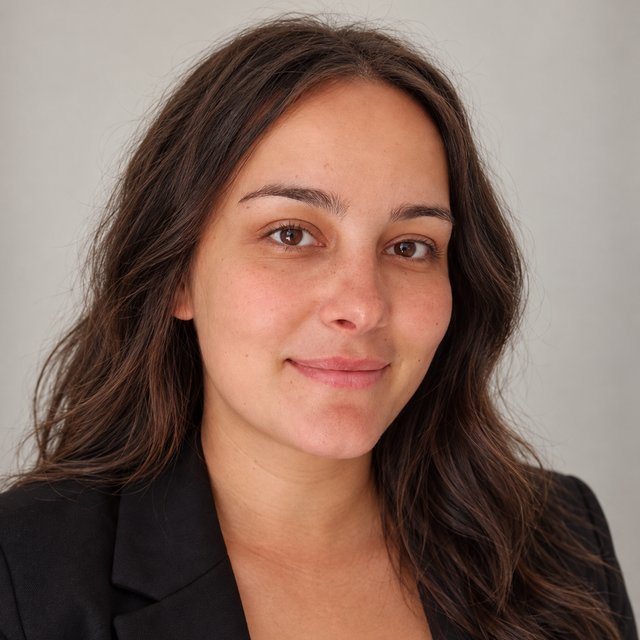
Alexia Katrantzidou
Runs finance, administration, contracts, and back-office — so engagements stay organised, compliant, and easy to work with from day one.
How I got here
The short version of a long road, from a school computer lab in Greece to the studio we run today.
- 2009 · Greece
It started with Pascal
In 2009 my school ran an IT class. Two hours a week, Pascal, a room full of classmates who found it hard. I found it oddly easy. A program read to me like a written process: this happens, then that, unless something else is true.
I could not explain it at the time. I only knew that programming logic made sense to me, and that I wanted more of it.
- The years after
Two hours a week were not enough
So I taught myself the rest. HTML first, then PHP, then Python, then databases and everything that sits behind a web application.
Somewhere along the way the languages stopped being the point. What I really wanted to understand was how a whole system works: how information is represented, moved, transformed, and finally used by someone.
- Bonn, Germany
Learning to turn chaos into data
I moved to Germany for a three-year vocational education at the Heinrich-Hertz-Europakolleg in Bonn, and worked as a developer at the same time. The work was not websites. It was crawlers, data mining, and information extraction: pages and documents written for people, turned into data a machine could trust.
One question shaped me there. What matters here, how do I recognise it, and how do I structure it so another program can rely on it? I have been asking it ever since.
- Back in Greece
Software meets real businesses
Back home the problems changed shape. I built a direct hotel booking platform that started with Greek hotels and ended up with hotel groups in several international markets. Through a long cooperation with a German software agency, working remotely from Greece, I built funding platforms for a large nonprofit, membership systems for a nationwide organisation with regional branches, and a project that digitised the route knowledge of railway drivers.
Different industries, the same lesson every time. Every organisation already has a way of working. It lives in Excel, in emails, in someone’s head. A database model is not a technical decision. It is an interpretation of how those people work, and if you get it wrong the software fights them for years.
- The pattern
The hard part happens before the code
After enough of those projects I stopped believing the code was the difficult part. People can improvise when something unusual happens. A computer needs a rule. People live with contradictions. Software has to resolve them.
“When the customer approves it, we process it” is one sentence for a business owner and ten questions for me. Who approves? Can it be withdrawn? What if processing fails? Finding those questions early, before they harden into an implementation, became the work I care about most.
- Today
Technology and Ethos
Techthos is Technology plus Ethos. The name is a promise: just because something can be built does not mean it should be built that way. Today Techthos is an independent studio that offers its services directly, and we keep that promise for other businesses.
Most of what we do is help companies grow through what we know. We improve their workflows, warn early about dangers and side effects, and say clearly what to do and what to leave alone. Our real skill is understanding: catching the actual need behind a request, fast. Years across very different industries are what make that fast.
Then we turn that need into something that works economically, securely, and reliably. Not only the software changes. The way people work changes too. Work should feel organised, efficient, stable, and harmonious. That is what I have been practising since a Pascal class in 2009, and it is what you get when you work with us.
— Alexandros Fotiadis, Co-founder
How the work actually gets done
“Specification-led, review-bound” sounds abstract. In practice it is a simple, repeatable loop — and it is what lets two people deliver like a much larger team.
We write the specification
Every project starts with a precise spec a senior engineer wrote. It defines what gets built and why, before any code exists. You own it — usable to brief any team, not just us.
Agents do the heavy lifting
Inside that spec, AI agents draft code, scaffold, generate tests, and handle the repetitive work — at a speed no human team matches. Agents never make architectural decisions on their own.
Alexandros reviews everything
No agent output reaches you unreviewed. Alexandros — our senior engineer and co-founder — checks every change against the specification, corrects it, and is personally accountable for what ships.
You get software you own
Working software, plus the source code, prompts, workflow definitions, and documentation — all yours, milestone by milestone. No lock-in.
Why two people is enough
Traditional studios add people to add capacity. We add capacity by improving the workflow — the prompts, the guardrails, the review checklists. That is why a two-person studio can run several projects at once and still have a senior engineer accountable for each one. Lean is not a limitation here; it is the product.
We give back what we can
When a tool we build internally is small, general-purpose, and free of customer specifics, we open-source it. It is our way of contributing to the community we rely on — and the clearest proof of how we build.
See our open sourceStart with a free Discovery
Tell us what you want to build. We will scope it, tell you honestly whether we are a fit, and you walk away with clarity either way.
Email us