AI and the illusion that you no longer need partners
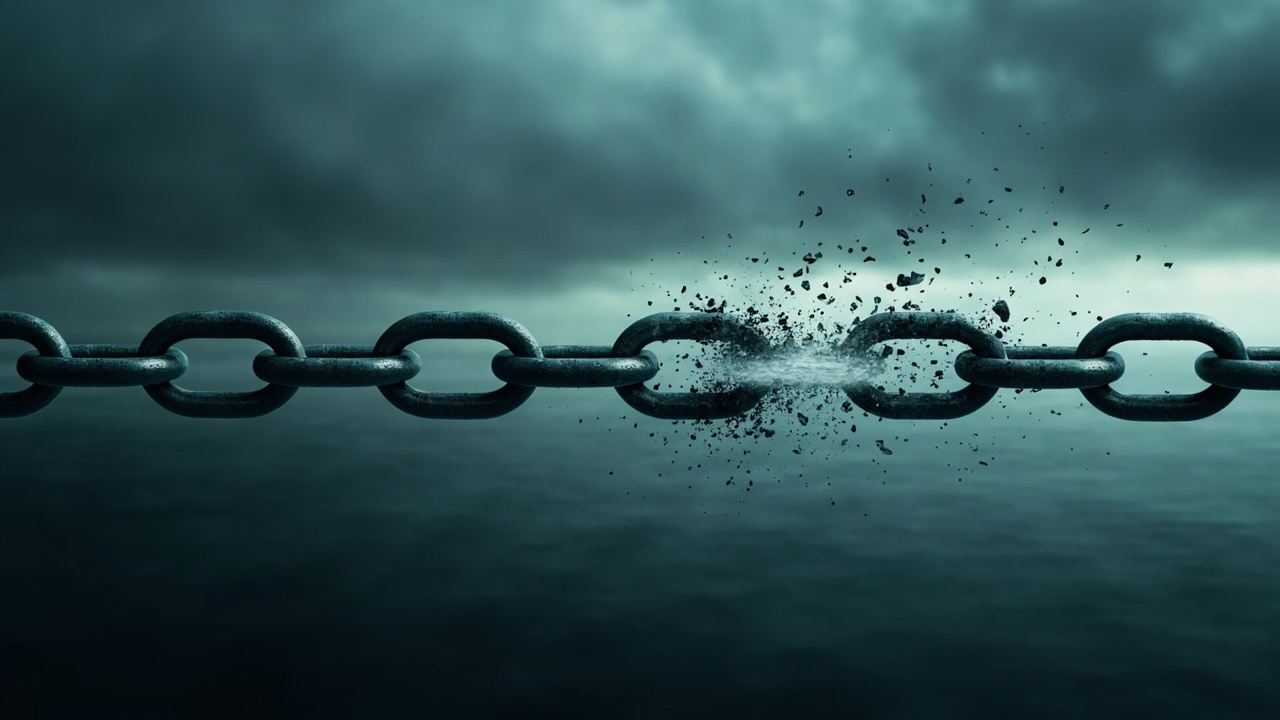
Every stable economy rests on a quiet agreement: I will do my part well, and I will trust you to do yours. Specialisation, division of labour, the long chains of suppliers and partners that turn raw effort into finished value — none of it works without that trust. It is the most valuable thing an economy produces, and it never appears on a balance sheet.
AI is now whispering a seductive lie into that arrangement: you can have all of it yourself, today. The accountant no longer needs the agency. The agency no longer needs the developer. The developer no longer needs the analyst. Each party looks at what a partner used to deliver, sees a tool that imitates the visible part of it, and quietly concludes the partner has become optional. This is the first real economic danger of the agentic era — not that AI takes the work, but that it convinces us to dissolve the relationships that made the work bearable.
The illusion of the self-sufficient party
The lie is comfortable because it flatters everyone at once. It does not arrive as a single bad decision; it arrives as a handful of reasonable-sounding ones, each pointing the same way.
- “I don’t need you anymore.” The core illusion. A partner’s output is now partly reproducible by a model, so the partner reads as redundant. What you can imitate, you assume you can replace.
- Cost pressure makes it attractive. Cutting a partner looks like instant margin. The line item is visible and immediate; what the partner quietly prevented is neither.
- The demo effect. AI’s confidence mirrors our own optimism. The demo always works. The edge cases — the ones the partner spent years learning to handle — stay invisible until they hit production.
- Independence as status. There is a quiet pride in owing no one. AI sells the fantasy of the self-made operation that needs no counterpart, and the fantasy is flattering enough to override the maths.
- Speed compresses the trial. AI shortens the apparent trial period to days. The decision to cut the partner feels validated before reality has had time to test it.
Each reason is defensible on its own. Stacked, they talk a party out of a relationship it spent years building, in an afternoon.
What the illusion cannot see
Here is what the self-sufficient party is quietly betting against: you never actually knew the full weight your partner carried.
The visible output was the tip. The responsibility was the iceberg — the exception handling, the judgment calls, the relationships that smoothed a late delivery, the regulatory reading, the two percent the model gets confidently and dangerously wrong, and the simple question of who is accountable when it does. You saw the deliverable. You did not see the work that the deliverable was the smallest part of.
Partnerships absorb risk silently. That is most of their value and the part nobody invoices for. Remove the partner and the risk does not vanish — it lands back on you, quietly, and you usually discover the transfer at the worst possible moment. An AI does not change this calculus, because an AI cannot be a counterparty. It cannot sign, it cannot be liable, it cannot be the one who picks up the phone at eleven at night when something has gone wrong. It is a capability, not a party. You can delegate work to it. You cannot delegate responsibility to it.
Two ways to hold the same tool
This is where the brief’s apparent contradiction resolves itself. AI is not the enemy of partnership. Used one way it dissolves partnerships; used the other it is the strongest thing that ever happened to them.
A party can hold AI as a wedge or as a multiplier. As a wedge, it is the reason to remove the partner — and what is left is a lonelier, more brittle operation that has traded a resilient relationship for a confident tool. As a multiplier, it sits on top of an existing relationship: two parties who already trust each other, each now faster, sharper and cheaper, still aimed at the same shared outcome. The wedge subtracts. The multiplier compounds.
So the future is not “AI or partners.” It is partners who adopt AI together. The parties that pull ahead over the next decade will not be the ones with the best model — that advantage is rented and temporary. They will be the ones who used the model to become better partners, and who chose to stay in the chains of trust rather than cut themselves out of them.
The storm is the test
The honest counterpoint deserves a hearing: sometimes a partner genuinely was redundant, and AI really does let you bring some work back in-house. That happens, and acting on it is sometimes correct. Not every dissolved partnership is a mistake.
But a partnership is never tested in the calm. It is tested in the storm — when the model is confidently wrong, when a regulation changes overnight, when the edge case nobody priced in finally arrives. In that moment the question is brutally simple: who picks up the phone? Trust does not degrade gracefully, and it cannot be provisioned on demand. You cannot stand up a relationship the morning you need it. The parties dissolving their partners in the calm are spending, in advance, the exact thing they will be unable to buy back when it breaks.
That is why the weak partnerships are already breaking — not because AI replaced them, but because AI handed both sides a reason to stop investing in each other before the test arrived. The tool did not end the relationship. It just gave everyone permission to neglect it.
Trust is the one asset AI cannot mint
AI multiplies capability. It cannot manufacture trust and it cannot carry accountability; those remain stubbornly, irreplaceably human. Every party that mistakes the first for the second is making the same wager, and the storm is already collecting on it.
It will keep thinning out the operations that mistook a confident tool for a partner. What survives will not be whoever automated the most. It will be whoever used the automation to become a partner worth keeping — and kept the partners worth having.